Euchre hand strength is determined primarily by trump count and bower holdings. Loner-quality hands hold both Bowers plus 2–3 supporting trump. Strong calling hands have 3 trump including one Bower with an off-suit ace. Marginal hands have 3 weak trump or 2 trump and 2 off-suit aces. Weak hands (fewer than 2 trump, no bowers) are almost always a pass. The Right Bower alone is worth roughly one guaranteed trick; both Bowers together are worth two.
Knowing how strong your hand is before you decide to call trump is one of the most important skills in euchre. Call too aggressively and you hand the opponents two free points. Pass too timidly and you leave points on the table. This guide breaks down euchre hand strength into clear tiers — from loner-quality powerhouses down to hands you should almost always pass.
How Hand Strength Is Measured in Euchre
Euchre hand strength comes down to three factors:
- Trump count — How many cards in your hand will be trump if you call that suit?
- Bower holdings — Do you hold the Right Bower, Left Bower, or both?
- Off-suit winners — How many non-trump aces (or near-certain trick-winners) do you hold?
The goal as the making team is to win at least 3 of the 5 tricks. Your hand needs to provide roughly 3 expected tricks when you call. Since your partner (in the 4-player game) will likely contribute 0–2 tricks depending on their hand, you should think of calling as: “can I reliably provide 2–3 tricks myself?”
Hand Strength Tiers
Tier 1: Loner-Quality Hand
Not sure which tier your hand is in? The hand evaluator looks up hands like yours in our simulation and shows the expected points of calling, passing, and going alone from your seat.
Both Bowers + 2 or more additional trump (possibly with an off-suit ace)
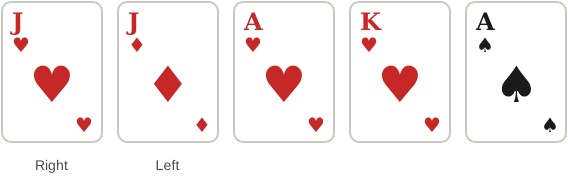
These are the hands where going alone is the right call. With both Bowers (the two highest cards in the game) and additional trump support, you can win all 5 tricks most of the time without needing your partner.
Examples (hearts as potential trump):
| Hand | Verdict |
|---|---|
| ♥J (Right), ♦J (Left), ♥A, ♥K, ♥Q | Best possible hand. Loner — call it. |
| ♥J (Right), ♦J (Left), ♥A, ♥K, ♠A | Strong loner. 4–5 tricks nearly certain. |
| ♥J (Right), ♦J (Left), ♥A, ♥9, ♣A | Solid loner. Right call in most seats. |
| ♥J (Right), ♦J (Left), ♥K, ♥Q, ♥9 | 4-trump loner. Very strong. |
Rule of thumb: Both Bowers + 2 supporting trump = go alone. Both Bowers + 1 trump + 2 off-suit aces = strong loner candidate. Both Bowers + weak hand = call trump (with partner), consider loner if second trump is Ace of trump.
Tier 2: Strong Calling Hand
3–4 trump including at least one Bower, plus off-suit support
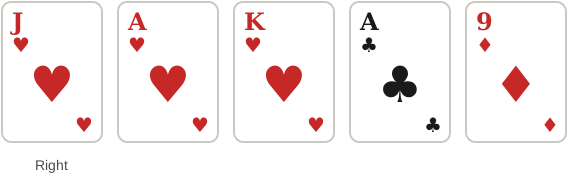
These hands are clear calls in any seat. You can comfortably expect 3–4 tricks and your partner should contribute at least 1 more. Going alone with these hands is typically risky without both Bowers.
Examples (hearts as potential trump):
| Hand | Expected Tricks | Verdict |
|---|---|---|
| ♥J (Right), ♥A, ♥K, ♥Q, ♠A | 4–5 | Clear call; consider loner |
| ♥J (Right), ♦J (Left), ♥9, ♣K, ♠10 | 3–4 | Call trump with partner |
| ♦J (Left), ♥A, ♥K, ♥Q, ♣A | 3–4 | Strong call |
| ♥J (Right), ♥A, ♥K, ♣A, ♦9 | 3–4 | Solid call from any seat |
| ♦J (Left), ♥A, ♥K, ♠A, ♣A | 3 | Strong call — great off-suit support |
What makes these hands strong:
- One or both Bowers provides guaranteed high tricks
- 3+ trump means you control the trump suit
- Off-suit aces add extra guaranteed or near-guaranteed tricks
Tier 3: Marginal Calling Hand
3 weak trump without a Bower, OR 2 trump + 2 off-suit aces
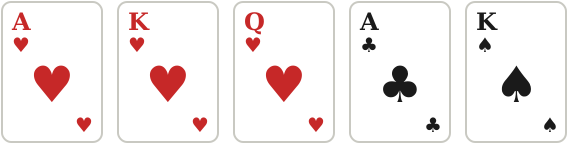
These hands are calls in favorable conditions (dealer position or second seat) and passes in tougher spots (first seat, or third seat when the opponents look strong). Whether to call depends heavily on seat position and score situation.
Examples (hearts as potential trump):
| Hand | Expected Tricks | Verdict |
|---|---|---|
| ♥A, ♥K, ♥Q, ♣A, ♠K | 2.5–3 | Dealer: call. First seat: pass. |
| ♥A, ♥K, ♥9, ♣A, ♦A | 2.5–3 | Second seat or dealer: call. |
| ♦J (Left), ♥9, ♣A, ♠A, ♦K | 2.5–3 | Depends on seat — lean toward call |
| ♥A, ♥Q, ♥9, ♣K, ♠A | 2–2.5 | Borderline — pass from first seat |
| ♥K, ♥Q, ♥10, ♣A, ♠A | 2 | Weak 3-trump hand — pass most situations |
The seat-position adjustment:
- First seat (left of dealer): Pass most marginal hands. You’re giving the dealer (your opponent) the turn-up card if you call.
- Second seat (dealer’s partner): More calling latitude — you’re giving the upgrade to your partner.
- Third seat: Similar to first seat — the card goes to the opposing dealer.
- Dealer: Call more often. You gain the turn-up card and can choose the best discard.
Tier 4: Weak Calling Hand — Usually Pass
2 trump with no Bower and weak off-suit cards, OR 3 weak trump with no off-suit support
With these hands, you’re likely to win only 1–2 tricks, leaving your partner to do the heavy lifting. Calling on a weak hand frequently results in a euchre — giving your opponents 2 free points. Pass and wait for a better deal.
Examples:
| Hand | Expected Tricks | Verdict |
|---|---|---|
| ♥K, ♥9, ♣Q, ♠10, ♦K | 1–1.5 | Pass. Not enough trump. |
| ♥Q, ♥10, ♣A, ♠K, ♦Q | 1.5–2 | Pass unless score demands aggression |
| ♥A, ♣K, ♠Q, ♦10, ♣J | 1–2 | Pass. Only 1 trump if hearts are called. |
| ♥9, ♥10, ♣A, ♠A, ♦K | 2 | 2 weak trump — pass from first seat |
When you might still call on a weak hand:
- You’re far behind on score and the opponents are near 10 points — sometimes forcing action is better than slowly losing
- Stick the Dealer forces a call in the second round — pick the suit where your hand is least bad
- Your partner passed in second seat from a position where they’d normally call — this signals a very weak hand, which changes how much partner help you can count on
Tier 5: Pass Hand
Fewer than 2 trump, or any hand where you can’t identify 3 expected tricks even with partner help
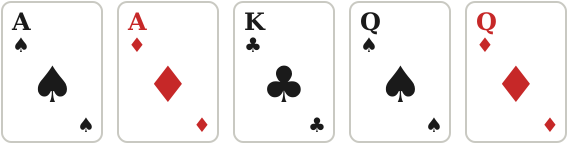
Always pass. These hands have no reliable trump control and will almost certainly result in a euchre if called.
Examples:
| Hand | Verdict |
|---|---|
| ♣A, ♠A, ♦K, ♥Q, ♦9 (if hearts called) | Pass. Only 1 trump (Queen). |
| ♦10, ♣Q, ♠K, ♥9, ♣J (if hearts called) | Pass. 1 weak trump. |
| ♠A, ♦A, ♣K, ♠Q, ♦Q (if hearts called) | Pass. 0 trump, 2 off-suit aces — not enough. |
The Value of Each Card Type
Understanding roughly how much each card contributes to expected tricks helps you evaluate any hand quickly.
| Card | Expected Tricks (Approx.) |
|---|---|
| Right Bower | ~1.0 (virtually guaranteed) |
| Left Bower | ~0.9 (very reliable) |
| Ace of trump | ~0.7 |
| King of trump | ~0.5 |
| Queen of trump | ~0.35 |
| 10 of trump | ~0.2 |
| 9 of trump | ~0.1 |
| Off-suit Ace | ~0.6 |
| Off-suit King | ~0.3 |
| Off-suit Queen/Jack | ~0.1–0.15 |
To call comfortably, you want your expected tricks to total 2.5 or more from your own hand — your partner makes up the remaining 0.5–1 trick needed.
A hand with: Right Bower (1.0) + Ace of trump (0.7) + Off-suit Ace (0.6) = 2.3 expected tricks. That’s a borderline first-seat call and a solid second-seat/dealer call.
A hand with: Left Bower (0.9) + King of trump (0.5) + Off-suit Ace (0.6) = 2.0 expected tricks. Pass from first or third seat; borderline call from second seat or dealer.
Hand Rankings by Trump Suit Held
When you’re evaluating whether to call a specific suit as trump, the order of your considerations should be:
- Do I hold the Right Bower? If yes, that’s 1 guaranteed trick. Everything else is gravy.
- Do I hold the Left Bower? If yes alongside the Right, you have 2 guaranteed tricks. A loner is plausible.
- How many total trump do I have? Count including both Bowers. 3 trump is a general minimum; 4+ is strong.
- How many off-suit aces do I have? Each adds roughly 0.5–0.6 expected tricks.
- What’s my seat position? Adjust thresholds by seat as described above.
Second-Round Bidding and Hand Strength
In Round 2, you name a suit yourself rather than accepting a turned-up card. This changes the evaluation:
- You play with your dealt hand — no dealer card exchange.
- All four suits are available except the turned-down one. Choose the suit where you have the most trump.
- The information from first-round passes tells you nobody had a dominant holding in the turned-down suit. It says less about the other suits.
- Minimum for a second-round call: Generally the same as first-seat Round 1 minimums — 3 trump with a Bower. Without a Bower, you need 4 trump or 3 trump + 2 off-suit aces.
When forced to call by Stick the Dealer, pick the suit where your longest holding is (most cards), even if that suit is weak. Any holding gives you more trump than the 0 you’d have if you picked randomly.
For full seat-by-seat bidding thresholds and specific hand examples, see the Bidding Strategy guide. For the math behind hand probability, see Euchre Probability & Odds.
Frequently Asked Questions
What is the best hand in euchre?
The best possible euchre hand is both Bowers (Right and Left Bower) plus the Ace, King, and Queen of trump. This hand wins all 5 tricks in virtually any situation and is a clear loner hand. Holding both Bowers with just one more trump is still an excellent loner candidate from most seat positions.
What is the minimum hand needed to call trump in euchre?
The generally accepted minimum is 3 trump cards including at least one Bower, or 2 strong trump (Bower + Ace or King) plus 2 off-suit aces. The exact threshold shifts by seat: first seat (left of dealer) needs the strongest hand; dealer can call on slightly lighter holdings because they gain the turn-up card.
How many trump cards do you need to go alone in euchre?
A reliable loner hand typically holds both Bowers plus 2 or more additional trump — giving you 4 or 5 near-certain tricks. Going alone with just the Right Bower and 2 additional trump is possible from the dealer position but risky. Without both Bowers, most loner attempts result in a euchre.
Is an off-suit ace worth calling trump for in euchre?
Off-suit aces have moderate value — each one is worth roughly 0.5–0.7 expected tricks depending on how many cards of that suit your opponents hold. An off-suit ace strengthens a marginal call but is not a substitute for trump strength. Two off-suit aces can tip a 2-trump hand into a viable call from second seat (dealer's partner).
What makes a hand worth calling on second round vs first round?
In the second round, the turned-down suit is eliminated and all four players have passed in the first round. This tells you that nobody has a dominant holding in the turned-down suit, and that the two players before you likely don't have powerful hands in the suit they ultimately pick. Second-round calls can be slightly lighter than first-round calls because you have more information — but you're playing with your dealt hand (no kitty pick-up), so you still need 3 reliable tricks.